The Sewer Line Every Wagener Terrace Buyer Forgets to Ask About
September 17, 2026
September 17, 2026
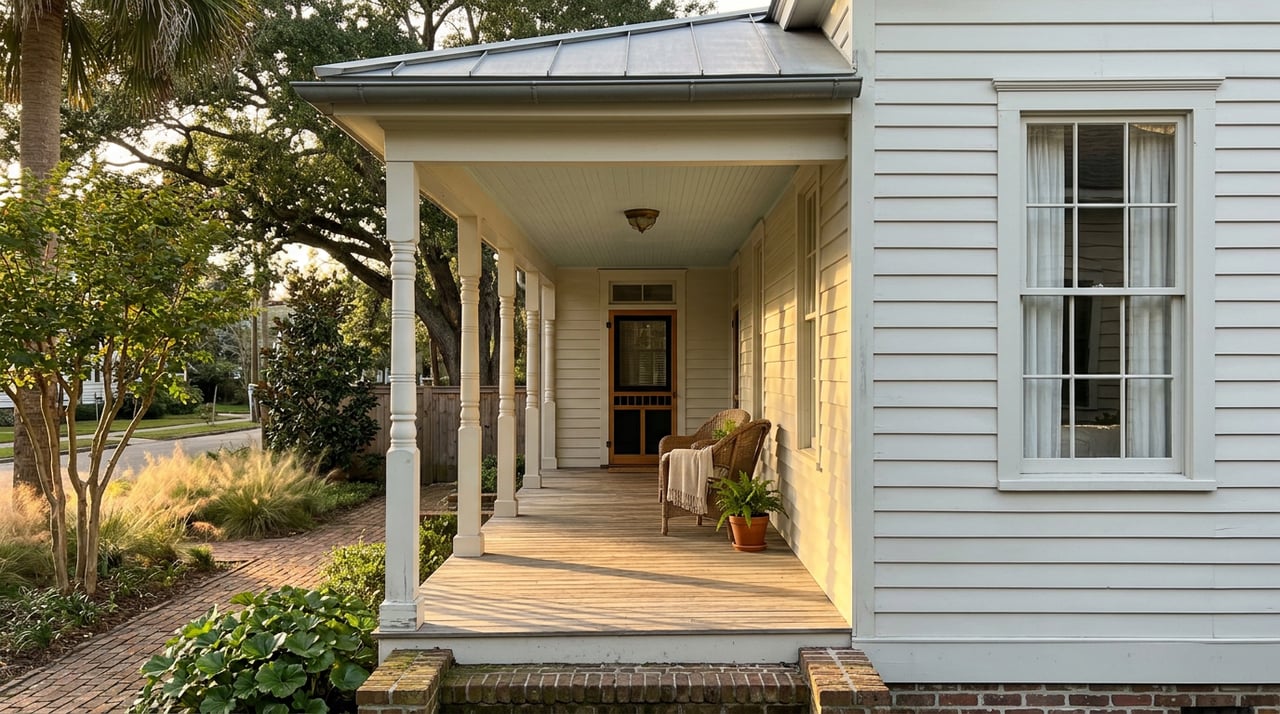
The first thing you notice on a Wagener Terrace walk-through is never the plumbing. It is the heart pine floors, the original coffered ceiling in the front room, the big azalea bed someone has clearly tended for decades. A good agent will walk you through the bones of the house, the roof age, the panel box, the crawl space. A good inspector will hand you a report thick enough to make you nervous about the water heater.
Almost nobody asks about the pipe running from the house to the street.
That gap matters more in this neighborhood than most, because of a detail that shows up in the historical record and nowhere in a listing sheet: the City of Charleston paved the streets and laid the original sewer lines in Wagener Terrace in 1923. The bungalows and cottages that give the neighborhood its character mostly went up through the 1920s and 1930s, on top of infrastructure that is now more than a century old.
Cast iron was the standard material for sewer laterals through most of that building era, and it earned its reputation. It is heavy, durable, and handles the pressure of surrounding soil well. It also has a documented service life of roughly 50 to 75 years before corrosion and joint failure become likely. Vitrified clay pipe, used even earlier, holds up structurally but is brittle and vulnerable to root intrusion at its joints.
Do the arithmetic on a Wagener Terrace bungalow built in 1932 with its original lateral still in the ground. That pipe is 94 years old this year, already 20 to 45 years past the point where cast iron typically starts to fail. It may still be functioning. Proximity to the Ashley River and a high water table have not made that easier on aging infrastructure. But "still functioning" and "sound" are different claims, and only one of them shows up on a standard home inspection.
A home inspector walks the crawl space, tests the fixtures, and runs water through the system to confirm it drains. That tells you the pipe works today. It does not tell you whether roots have already worked their way into a hairline joint crack, whether a section has settled into a belly that collects waste instead of moving it along, or whether a previous owner patched a break with a fix that will not hold.
The tool that answers those questions is a sewer scope, a camera run through the line from a cleanout or the main stack. It is not part of a standard inspection package in most cases, which means a buyer has to ask for it and usually pay for it separately. Given the mature live oak canopy that makes these streets so appealing, root intrusion is not a hypothetical. Those same trees that shade a wide front porch are, underground, doing exactly what tree roots do: seeking out the moisture inside a century-old clay or cast iron joint.
If a scope finds a problem, the fix depends on what kind of problem it is. A localized crack or a short section with root intrusion can often be handled with a trenchless repair, lining or bursting the existing pipe without digging up the yard, and that typically runs in the low thousands. A full lateral replacement, particularly if the old pipe has settled or shifted along its length, means open trenching and a bill that climbs toward the higher end of that range or beyond, depending on the length of run and what is in the way between the house and the street.
Neither number is catastrophic on its own. What matters is that it is a real, foreseeable cost tied to the age of the house, not an unlikely worst case, and it is the kind of number that belongs in a negotiation rather than a surprise after closing.
Here is where local knowledge actually changes the advice. Charleston Water System and Charleston Waterkeeper reached a settlement that creates a sewer lateral replacement grant program, and it has been covered in the Post and Courier as a real step toward reducing the sewage overflows that have plagued parts of the area. It is easy to hear about that program secondhand and assume it applies citywide.
It does not. The program specifically targets homeowners with fragile clay pipe connections in areas that were built out under the old St. Andrews Public Service District, mostly in West Ashley. A Post and Courier editorial on the agreement makes the origin of that gap explicit: downtown Charleston's sewer lines were installed and maintained continuously by Charleston Water System and its predecessor from the start, while West Ashley's lines were built and maintained by a separate district that did not raise rates enough to keep up with them.
Wagener Terrace sits inside that first category. Its lines have always been a Charleston Water System responsibility, not a legacy St. Andrews line, which means the grant funding aimed at West Ashley's clay pipe problem is not a resource available to a bungalow owner here. The pipe is old for the same underlying reason West Ashley's is old. The fix for one has public money behind it. The fix for the other is the homeowner's line item.
For a buyer, the useful move is straightforward: request a sewer scope as part of due diligence, the same way you would request a well or septic test in a different part of the Lowcountry. If the scope turns up root intrusion or a belly in the line, that becomes a specific, dollar-figure item to negotiate, either as a seller credit or a pre-closing repair, rather than a vague concern about "old pipes" that gets waved away.
For a seller, the calculus runs the other direction. A clean sewer scope done before listing removes a variable that a buyer's inspector will eventually raise anyway, and it lets you set a price without a discount baked in for a problem nobody has actually confirmed. Given that most of Wagener Terrace's housing stock predates the pipe's expected lifespan, a documented scope report is closer to standard due diligence than an unusual ask, on either side of the transaction.
Does a standard home inspection include a sewer scope? Typically not. Most general home inspections test that fixtures drain and water runs, but a camera inspection of the lateral line itself is a separate service that has to be requested and scheduled on its own.
Is an old sewer line always a problem? Not necessarily. Some original laterals have been replaced over the decades, and cast iron and clay pipe can function well past their typical lifespan if soil conditions and root activity have been kind to them. The point of a scope is to find out which situation you are actually in rather than guess based on the age of the house.
Can I ask the seller to cover a sewer repair found during due diligence? That is a negotiation point like any other inspection finding, and how it gets resolved depends on the contract terms and what the scope actually shows. Having the report in hand, rather than a general concern, is what makes that conversation productive.
If you are weighing a bungalow in Wagener Terrace, or trying to figure out what a century-old lateral means for a house you already love, this is exactly the kind of detail worth talking through before you write an offer. Kaylan Tyler has spent years walking these blocks and knows which questions belong in a Wagener Terrace due diligence period. Schedule a consultation and let's go through your specific house, line by line, before it becomes a surprise instead of a plan.
Stay up to date on the latest real estate trends.



For an unmatched Charleston real estate experience tailored to your needs, reach out to Kaylan Tyler today. Let her passion and expertise guide you in finding or selling your dream home. Contact Kaylan now to begin your journey towards the perfect Charleston lifestyle!