How to Enjoy an Old Village Pitt Street Sunset Evening
August 6, 2026
August 6, 2026
Ask a visitor about Pitt Street Bridge and you get the postcard version: a rickety wooden pier, herons, a sunset. Ask someone who has lived three blocks off Venning for a decade and you get a different answer, because the corridor they walk after dinner is not the one they walked in 2023.
Between a July 2025 ribbon cutting and a strange one-week closure this past January, the Town of Mount Pleasant has been treating the bridge less like a photogenic ruin and more like a piece of neighborhood infrastructure it plans to keep for another century. That shift is small on paper and large in practice, and it changes how a late-summer evening in the Old Village is worth building.
Most residents felt the change before they read about it. The stretch of Pitt Street from Schweers Lane down to the park entrance now has a clearer separation between cars, bikes, strollers, and the golf carts that treat Pitt like an extension of the driveway. That is not an aesthetic choice. It is the Pitt Street Bridge Micromobility Improvements Project, which the town completed with a ribbon cutting on July 1, 2025, attended by Councilmembers John Iacofano, Gary Santos, Mike Tinkey, and Daniel Brownstein.
"These improvements help preserve the Pitt Street Bridge area while making it safer and more enjoyable for all who visit," Project Manager Rion Longfellow said at the ceremony, framing the work as a mix of safety and environmental stewardship along a corridor the town described as environmentally sensitive.
The practical result for a resident is that the after-dinner walk down to the pier feels less like negotiating a shared shoulder and more like a designed path. The stretch is short, roughly the length of Pitt from the pharmacy end down to the water, but it is the piece that used to feel the most exposed at dusk.
For the first full week of 2026, the town closed a portion of the bridge for what it called "exploratory digging." Crews dug two roughly four-foot-deep holes spanning the width of the causeway to understand how the original 1927 span was actually built, information the town's engineers said would inform future maintenance and preservation. The closure ran from January 5 and the bridge reopened January 8, 2026, with roughly 600 feet of the causeway kept open the whole time.
That is the sort of item that reads like a maintenance footnote and functions like a signal. Nothing about a fishing pier that used to be a car bridge requires exploratory engineering unless someone at Town Hall intends to fix it properly rather than let it keep losing planks to weather. Read alongside the micromobility project, the message to residents is that the walk to the end of the bridge is not going to quietly disappear the next time a hurricane makes landfall.
A little context on what is actually underfoot: the current bridge was built in 1927 to carry cars across Cove Inlet to Sullivan's Island, replacing an 1898 trolley bridge, which itself had replaced a pre-Revolutionary War footbridge made of planks laid on barrels. The crew of the H.L. Hunley used that plank-and-barrel version in 1864 on their way to a test dive. The Ben Sawyer Bridge took over in 1945, fire and Hurricane Hugo took the rest, and the town eventually turned what was left into the park most people use today.
The Pitt Street commercial strip is thirty-something blocks of walkable Old Village compressed into a handful of storefronts, and the version of it that gets written up for visitors treats the pharmacy soda fountain as the whole story. Residents can do more with a Tuesday.
A workable late-summer loop, starting around 6:30 p.m.:
That is a two-hour evening that uses the neighborhood's actual assets in the order the light and the kitchens want you to use them. It also solves the problem residents keep running into on weekend nights, which is that everything on Pitt Street runs on a shorter clock than Coleman Boulevard and Shem Creek.
Alhambra Hall reads on Instagram as a wedding venue, which it is. The 1937 building sits on the site of an 1847 picnic ground called Hort's Grove, developed by the owners of the Mount Pleasant Ferry Company as a summer retreat and dance hall over the harbor. Its main hall runs 40 by 80 feet, seats around 200 for dinner, and has been recently updated with a new stone patio, refinished hardwood floors, and upgraded suites.
What the wedding-photography angle misses is the ground itself. The lawn and porches are public park, open to residents whether or not a rental is happening inside. The town's own listing spells this out, and Alhambra Playground across Middle Street is a free, unfenced, waterfront-adjacent play area that works for a toddler and a dog at the same hour. On a weekday evening with no event on the calendar, the grassy stretch behind the hall is the highest-return waterfront square footage in Mount Pleasant that no one is charging you to use.
The etiquette residents learn by year two: check for a tent or a white-runner setup before you spread a picnic blanket, keep dogs leashed on the grounds, and stay off the porches when the doors are propped open for a rental. Beyond that the space is yours.
A short list of things that come up in neighborhood conversations more than they should:
None of this is secret. It is the kind of local knowledge that gets absorbed by osmosis over a couple of years of living within a mile of Alhambra Playground, and it is also the difference between an evening that works and an evening that ends with a two-block walk to the car in the dark.
The exploratory digging in January was described by town engineer Michael Hilton as a step toward planning future repairs, not the repairs themselves. That means somewhere on the town's calendar is a longer project cycle for the bridge, and residents who use the pier daily should expect at least one more closure window before it is done. The town has been posting updates through the tompsc.com newsroom, and the ribbon-cutting cadence suggests they will hold a public event when the real work wraps.
For the rest of August and into the fall, the routine that works is the one described above. Sunset is still landing after 8 p.m. through most of August, which means a 6:30 start covers ice cream, shopping, the walk, and the last real light on the water before dinner. That window narrows fast in September, and it is worth using while it is generous.
If you are considering a move within the Old Village or thinking about how a home a few blocks from Pitt Street actually lives day to day, the team at Kaylan Sells Charleston walks these streets on the same evening schedule you would. Reach out to schedule a consultation and we will show you the neighborhood the way its residents already use it.
Stay up to date on the latest real estate trends.
charleston lifestyle
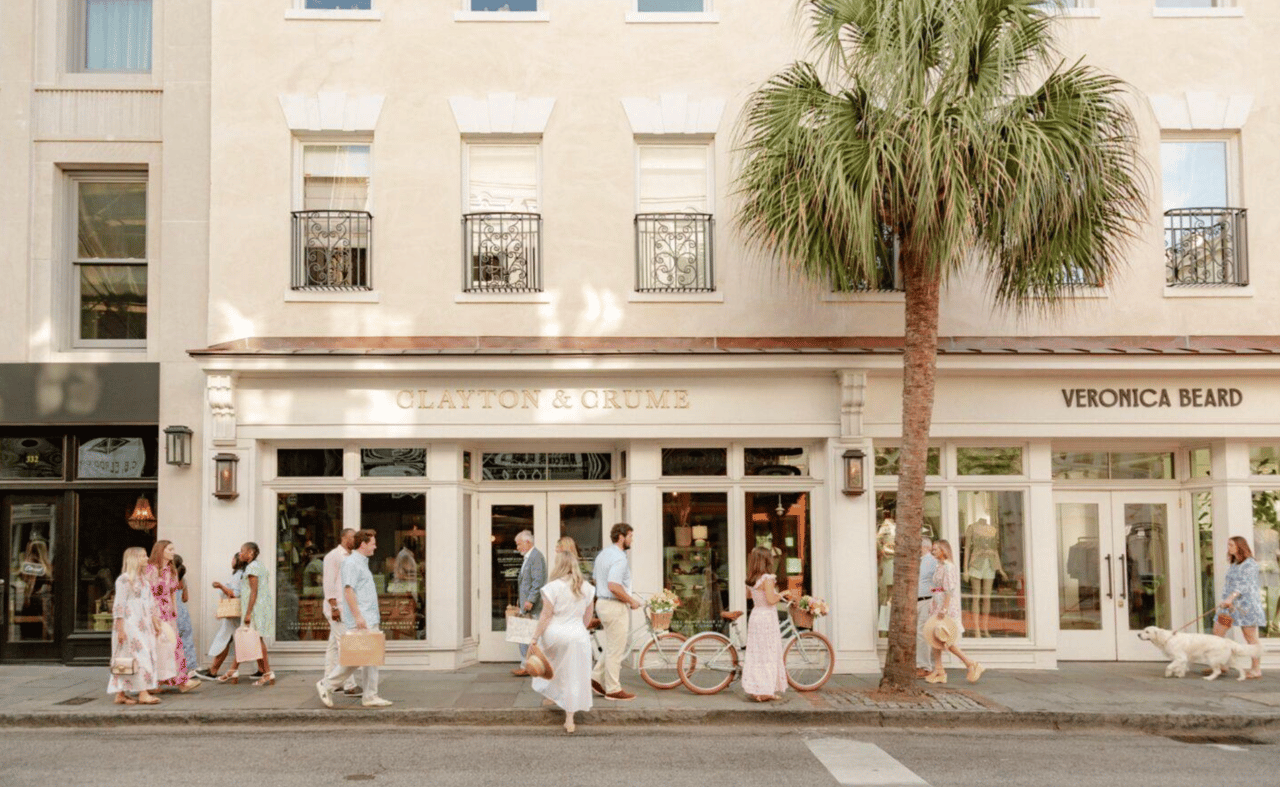
From Charleston institutions and independent boutiques to designer flagships, here’s where to shop along one of downtown’s most iconic streets.
For an unmatched Charleston real estate experience tailored to your needs, reach out to Kaylan Tyler today. Let her passion and expertise guide you in finding or selling your dream home. Contact Kaylan now to begin your journey towards the perfect Charleston lifestyle!