Wagener Terrace Home Prices: Why the Medians Tell Different Stories
September 24, 2026
September 24, 2026
Pull up two real estate sites on the same afternoon and search Wagener Terrace. One will tell you the median sale price just dropped nearly 10 percent from a year ago. The other will tell you it's up double digits over the same stretch. Both numbers are current. Neither is wrong. That should tell you something about what "median price" actually means in this neighborhood, and it isn't what most buyers assume.
As of August 2026, Redfin's tracker for Wagener Terrace showed a median sale price of $959,537, down 9.05 percent year over year. Around the same window, other portals pulling from the same MLS were reporting medians anywhere from $995,000 to $1,125,000, several of them up double digits year over year. Same neighborhood name. Same rough time frame. Directionally opposite stories.
This isn't a data error. It's what happens when a single line on a chart tries to describe three different housing products that all happen to share a mailing address.
Ask a longtime Charleston agent where Wagener Terrace starts and stops, and you'll usually get the same answer: it depends which part you mean. The area marketed as Wagener Terrace is actually made up of three distinct pockets. There's the historic core, built out mostly between the 1920s and 1950s with Craftsman bungalows and Colonial Revivals on broad, walkable streets. There's Longborough, a smaller and more exclusive 27-acre enclave tucked along the Ashley River with its own private dock and community waterfront park, where custom homes have been going up since 2004. And there's Lowndes Point, a quieter residential pocket that gets folded into the same listings.
The neighborhood's origin story explains why. Frederick Wagener, a wholesale grocer, lived at Lowndes Grove on the Ashley River. After he sold the property in 1917, developer James Sottile split roughly 20 acres into residential lots and built out what became known as the Wagener Terrace Subdivision, according to the neighborhood's Wikipedia entry. Longborough and Lowndes Point developed later, on adjacent parcels, and eventually got absorbed into the same MLS neighborhood tag. The name stuck to all of it. The housing stock did not homogenize to match.
Here's roughly how the products break down, based on recent listing and sale data across the neighborhood:
| Sub-market | What you're buying | Typical price range |
|---|---|---|
| Core Wagener Terrace bungalows | 1920s to 1950s Craftsman cottages, most renovated | High $600s to $1.3M |
| Longborough | Custom, often elevated homes on the Ashley River, built since 2004; The Cottages townhomes at the lower end | $1.4M to $3.5M+ |
| Condos, duplexes, rowhouses | Converted buildings and small boutique communities like Bordeleaux | Low $400s to mid $700s |
Listings this past year have spanned from roughly $628,000 to $2,658,000 within the neighborhood, according to a Homes.com snapshot from last October. That's not three homes at three price points. That's the whole spread compressed into one "neighborhood," and it's why a single median tells you almost nothing about what a specific price actually buys until you know which of the three markets you're standing in.
Wagener Terrace doesn't sell in volume. Listing counts hover in the low double digits at any given time, and the neighborhood typically sees only a handful of closings in a given month. When your total sample is five or six homes, one $2.6 million Longborough waterfront closing sitting next to two $700,000 bungalow sales will pull the median in a direction that has nothing to do with where the broader market is heading. Pull that same waterfront sale out of the sample the following month and swap in a couple of smaller condo sales instead, and the median can swing by a hundred thousand dollars or more without a single underlying home changing in value.
This is also why different portals disagree even when they're drawing from the same MLS feed. Some report medians across all home types, including condos and townhomes. Others filter to houses only, or to specific categories like three-story homes. Each filter changes which handful of sales lands in the sample, and with a pool this small, the filter matters as much as the market does. You can watch the same site publish two different twelve-month medians on two different subpages of its own neighborhood guide, both technically accurate, both describing a different slice of the same twelve months.
None of this means the data is unreliable. It means a single median for "Wagener Terrace" blends markets that don't actually compete with each other. A buyer shopping the bungalow core isn't bidding against someone building on a marsh-front Longborough lot, and neither one should expect the quoted neighborhood median to tell them much about their own price range.
If you're using Wagener Terrace's median price to size up whether a specific listing is a good deal, the number you want isn't the neighborhood median. It's the median for homes that actually resemble the one you're looking at. A few things worth checking before you lean on any published figure:
None of this is to say the neighborhood is just a spreadsheet problem. The Wagener Terrace Neighborhood Association still runs on ten dollars a year in dues and puts on an annual Oyster Roast at Lowndes Grove Plantation, the same property Frederick Wagener once called home. Longtime local stops like Rutledge Cab Co. and Moe's Crosstown Tavern anchor the edges of the neighborhood, and Corrine Jones Park still hosts the low-key evening tennis matches that residents talk about more than any price trend. Adaptive projects like the Tharin House, a 1932 building on the National Register of Historic Places now reimagined as a collection of individual residences, show how the neighborhood keeps its older bones while still finding new uses for them.
That texture is exactly why the median gets misread so often. People search "Wagener Terrace" because they've heard it's one of the more interesting corners of the peninsula, and they land on a price number that flattens three different housing markets into a single line. The neighborhood earns its reputation. The number just doesn't do it justice on its own.
Is Longborough considered part of Wagener Terrace, or a separate neighborhood? Both, depending on who's asking. Longborough was developed on land adjacent to the original Wagener Terrace Subdivision and functions as its own distinct enclave, with a separate entrance feel and waterfront amenities. Most MLS listings and portal data still group it under the broader Wagener Terrace umbrella, which is exactly why the neighborhood's price data reads as inconsistent.
Why do different real estate websites show different price trends for the same neighborhood? Mostly because of sample size and filters. With only a handful of closings in a typical month, whether a given page includes condos, filters to single-family houses only, or happens to capture a waterfront closing in its window can shift the reported median substantially, even when comparing data from the same general time period.
If you're weighing a specific Wagener Terrace listing against what similar homes have actually sold for, or trying to figure out which sub-market a property falls into before you tour it, that's the kind of groundwork worth doing before you make an offer. Kaylan Tyler works this neighborhood block by block. Schedule a Consultation to talk through what a specific address is really worth.
This article is general information, not legal, tax or financial advice. Consult a qualified professional about your situation.
Stay up to date on the latest real estate trends.
charleston lifestyle
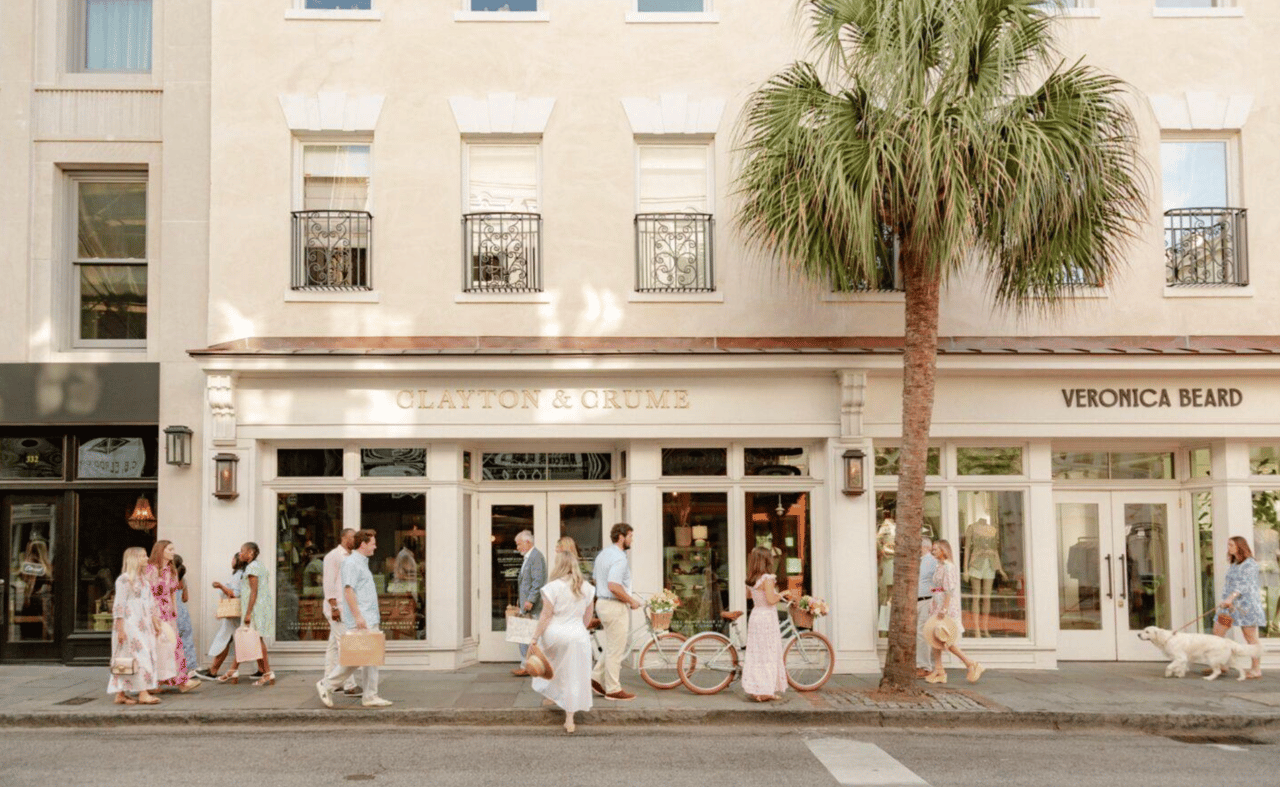
From Charleston institutions and independent boutiques to designer flagships, here’s where to shop along one of downtown’s most iconic streets.
For an unmatched Charleston real estate experience tailored to your needs, reach out to Kaylan Tyler today. Let her passion and expertise guide you in finding or selling your dream home. Contact Kaylan now to begin your journey towards the perfect Charleston lifestyle!