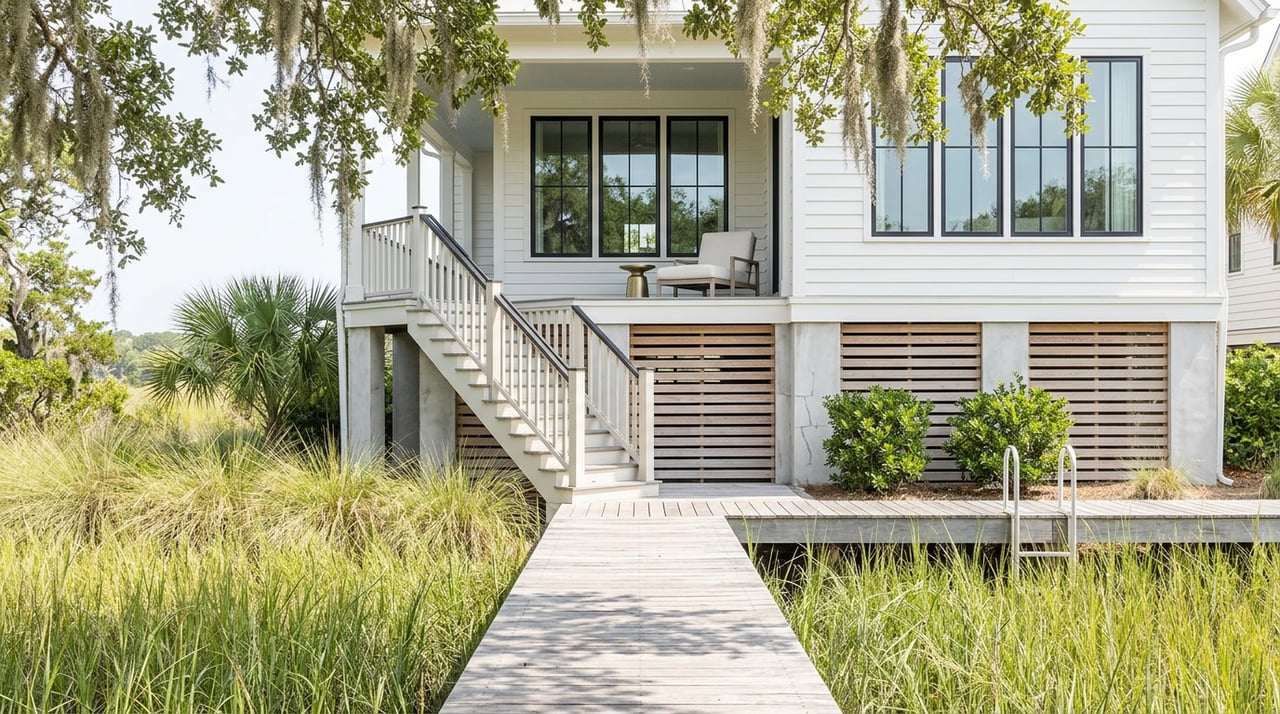
Johns Island Waterfront Homes: Buyer Essentials
March 24, 2026
March 24, 2026
Salt air, golden marsh, and a boat in the backyard sound like the dream. On Johns Island, that dream comes with a few smart steps that protect your budget and peace of mind. If you are eyeing marshfront, tidal‑creek, or deepwater living, you need clear answers on pricing, flood and insurance, and what it takes to secure or maintain a dock. In this guide, you will learn the essentials and get a practical checklist you can use during due diligence. Let’s dive in.
As of March 2026, Johns Island offers a broad mix of waterfront options, from cozy marshfront cottages to multi‑million‑dollar deepwater estates. A recent listing snapshot shows about 69 active waterfront homes with a median list price around $730,000 and a median of roughly 79 days on market. Inventory shifts seasonally, so treat these as directional and verify current numbers when you start your search.
Typical price ranges on Johns Island tend to group like this:
What drives value: direct deepwater access versus marshfront views, lot size and buildable upland, whether a dock permit exists and can be transferred, septic versus municipal sewer, elevation relative to Base Flood Elevation, and proximity to boating hubs like Bohicket Marina.
Start with the parcel’s FEMA flood zone. Look up the property on the FEMA Flood Map Service Center and download the effective Flood Insurance Rate Map panel. You can use the FEMA tools at the Flood Map Service Center. Ask the seller for any Elevation Certificate and Letters of Map Amendment or Revision.
Local rules also matter. Charleston County expects finished floors and utilities to meet or exceed the applicable Base Flood Elevation. Review county floodplain guidance and confirm which jurisdiction applies to your lot, since parts of Johns Island fall under different local authorities. County resources are available on the Charleston County emergency management page.
If the home is in a Special Flood Hazard Area, most lenders require flood insurance. The National Flood Insurance Program (NFIP) typically has a 30‑day waiting period before coverage begins, so plan ahead and time your policy with closing. You can review basic policy terms at FloodSmart.gov.
Pricing changed under NFIP Risk Rating 2.0, which uses property‑specific factors like elevation and distance to water. Coastal premiums often run higher than inland. Get quotes early from both NFIP and private carriers. For background on rating and coverage limits, see the NFIP manual overview provided to agents in the NFIP Flood Insurance Manual.
Some waterfront parcels may be inside Coastal Barrier Resources System units. CBRS locations are not eligible for NFIP, so buyers must use private flood options. You can learn about CBRS communities from the U.S. Fish and Wildlife Service’s page on the Coastal Barrier Resources System.
Johns Island and the greater Charleston area continue to plan for sea level rise and nuisance tidal flooding. Community rating and mitigation work can support premium discounts, so ask about current CRS status. For local planning context, the City of Charleston shares updates and documents on resilience and adaptation.
In South Carolina, the Office of Ocean and Coastal Resource Management within SCDHEC is the primary state authority for docks, boat ramps, bulkheads, and living shorelines. Their standards are set in Regulation R.30‑12. Review the regulation here: SCDHEC OCRM Regulation R.30‑12.
Many projects also need federal authorization. The U.S. Army Corps of Engineers regulates work in navigable waters and wetland impacts. Learn more about federal review on the USACE Charleston Regulatory site. Local building permits and floodplain reviews apply as well, so confirm whether your property falls within the City of Charleston or unincorporated Charleston County.
Minor, in‑kind repairs are usually faster to approve. New docks, major changes, or work that affects wetlands or navigation often require both OCRM and USACE review, plus public notice, which can take several weeks to multiple months. If the seller says a dock is permitted, request the OCRM permit and any USACE documents, and confirm transferability and conditions. Find federal process details on the USACE Charleston Regulatory page and state standards in R.30‑12.
Request and verify these items while under contract. Each can change your design options, insurance costs, and financing outcome.
Beyond the purchase price, budget for dock construction or repairs, bulkhead or living‑shoreline work, annual flood insurance, coastal wind and hail premiums, and regular upkeep for pilings, boat lifts, and seawalls. Costs vary widely by site and scope, so get local contractor estimates during your due diligence. Baseline standards for docks and shorelines are in R.30‑12.
Lifestyle on Johns Island centers on the water. You can launch a kayak at sunrise, fish the creeks, and be close to Bohicket Marina, Freshfields Village, and Folly outings, often with more land and privacy than the barrier islands. Compared with oceanfront markets nearby, Johns Island usually offers larger lots and a lower entry point for marshfront and creek living, with deepwater options that still offer direct routes toward the harbor.
Waterfront success comes from early planning. Confirm your flood zone and elevation, get both NFIP and private flood quotes, and assess dock feasibility before you fall in love with a view. A local agent who understands permits, insurance, and vendor coordination will save you time and surprises. If you want a calm, step‑by‑step path to the right Johns Island property, connect with Kaylan Tyler for concierge‑level guidance from first tour to closing.
Stay up to date on the latest real estate trends.


charleston lifestyle
From Charleston institutions and independent boutiques to designer flagships, here’s where to shop along one of downtown’s most iconic streets.
For an unmatched Charleston real estate experience tailored to your needs, reach out to Kaylan Tyler today. Let her passion and expertise guide you in finding or selling your dream home. Contact Kaylan now to begin your journey towards the perfect Charleston lifestyle!