Best Mount Pleasant Neighborhoods for Charleston Commuters
April 16, 2026
April 16, 2026
If your workday starts in downtown Charleston, where you live in Mount Pleasant can shape your whole routine. A few miles on the map can mean a noticeably easier morning, a different home style, or more space and amenities for the same budget. If you are weighing commute time against lifestyle, this guide will help you sort through the neighborhoods that stand out most for downtown commuters. Let’s dive in.
Mount Pleasant’s downtown connection revolves around a few major routes: the Arthur Ravenel Jr. Bridge, US-17/Johnnie Dodds, Coleman Boulevard, and I-526. For most daily commuters, the bridge is the key link to the Charleston peninsula, which is one reason neighborhoods closer to it tend to command higher prices.
According to a local summary of the Town of Mount Pleasant’s economic strategy, about 29% of workers living in town commute to the Charleston Peninsula, the Neck, or Daniel Island. That helps explain why south Mount Pleasant neighborhoods often draw buyers who want to stay close to downtown access. You can read more in this Mount Pleasant commute overview.
It also helps to keep commute estimates in perspective. Most neighborhood drive times are best viewed as off-peak estimates, and peak traffic can add roughly 10 to 20 or more minutes depending on your route and time of day.
If your top priority is getting to downtown Charleston as quickly as possible, south Mount Pleasant is usually where your search starts. These neighborhoods put you closest to the Ravenel Bridge and the most direct routes into the peninsula.
Old Village is the standout if your goal is the shortest drive. Local neighborhood guides place downtown Charleston about 10 to 15 minutes away off-peak via the Ravenel Bridge, making it one of the strongest options for professionals who want to stay close to the peninsula.
Beyond commute convenience, Old Village offers a distinct housing mix. This 37-block waterfront district includes historic restored homes, 1940s cottages, mid-century ranches, and newer Lowcountry construction. According to this Old Village neighborhood guide, current listing data show a median listing price around $3.7M, so the convenience comes with premium pricing.
For many buyers, Old Village is less about maximizing square footage and more about location, character, and day-to-day ease. If you want a highly convenient commute and do not mind older streets or a smaller lot footprint, it is hard to beat.
I'On is another top choice for downtown commuters who want a quick drive but prefer a more planned neighborhood setting. Local guides also place downtown Charleston about 10 to 15 minutes away, which keeps it in the shortest-commute group.
Set on 243 acres with about 750 homes, I'On is known for its New Urbanist design and varied architecture, including Lowcountry vernacular, Charleston Single, and Colonial Revival styles. The neighborhood guide from Coastal CHS for I'On notes a general price range of roughly $1.3M to $5M.
I'On also stands out for amenities. The I'On Club includes year-round aquatics, tennis, pickleball, fitness, and dining, which can make it appealing if you want a strong lifestyle package without giving up proximity to downtown.
Not every commuter wants to pay for the closest possible address. If you want a practical balance between access, price, and daily convenience, one neighborhood rises to the top.
Belle Hall Plantation is a smart middle-ground option for buyers who want a shorter drive than north Mount Pleasant without stepping all the way up to Old Village or I'On pricing. It sits in central Mount Pleasant near I-526, which gives you flexibility for getting around the area.
The official community site describes Belle Hall as seven neighborhoods with single-family homes beginning around $250K and exceeding $1M, plus two miles of trails, pools, a crabbing dock, a community park, ponds, and nearby shopping. A Realtor.com snapshot cited in the source material places the neighborhood median at about $927K. You can explore more on the Belle Hall Plantation community site.
For commuters, the key advantage is balance. You are not as close to the bridge as south Mount Pleasant, but you are also not as far north as some larger master-planned communities. That can make Belle Hall a strong fit if you want a manageable downtown trip and a more moderate price point relative to the closest-in neighborhoods.
If you are willing to accept a longer drive in exchange for newer homes, more square footage, or a deeper amenity package, several north and mid-Mount Pleasant neighborhoods are worth a close look.
Hamlin Plantation lands in the middle of the commute spectrum. One local guide places downtown Charleston about 20 minutes away, while Isle of Palms is about 10 to 15 minutes away, making it appealing if you want access to both downtown and the coast.
Housing options range from luxury townhomes to single-family homes and custom waterfront estates with private docks. A current Realtor.com market page cited in the research shows a median home price around $885K, while neighborhood guides note some sections can range from about $600K to well above $2M. This Hamlin Plantation neighborhood overview highlights the breadth of options.
Amenities are a major part of the appeal here. The neighborhood includes a clubhouse, junior Olympic pool with waterslide, fitness center, trails, and tennis. If you want a commute that is still workable with a stronger amenity package, Hamlin deserves a spot on your list.
Park West is one of the most practical tradeoff neighborhoods for downtown commuters who want more house and a more self-contained lifestyle. Coastal CHS describes it as a 2,673-home, 1,700-acre master-planned community with housing that ranges from condos and townhomes to traditional single-family homes and custom marshfront estates.
The current price range is about $300K to $3.5M, with a median around $709,500, according to the Park West neighborhood guide. Off-peak, guides place the downtown drive at around 20 to 25 minutes via US-17 and the Ravenel Bridge.
Park West also stands out for convenience inside the community. The neighborhood includes a grocery store, fitness center, medical offices, and more than six miles of trails. If your priority is getting more flexibility in home type and daily errands while keeping downtown within reach, Park West can offer a compelling balance.
Carolina Park is one of the newer large-scale options for buyers who value newer construction and built-in infrastructure. The official community site describes it as a 1,700-acre master-planned community centered on recreation, shopping, education, and day-to-day convenience.
The Riverside brochure notes homes on quarter- to half-acre lots ranging from 2,000 to 5,000 square feet, starting from the $700s to $1M+, with amenities like Bolden Lake, a kayak launch, trails, dog park, tennis, and nearby retail and civic services. Commute estimates place parts of Carolina Park about 20 to 25 minutes from downtown Charleston depending on section and traffic. You can learn more on the Carolina Park community site.
Realtor.com data referenced in the research puts the median home price around $1.402M, so Carolina Park is best viewed as a newer-construction lifestyle option rather than a budget commute play. If your goal is modern housing and a polished master-planned setting, it may be worth the extra drive time.
Some buyers want downtown access, but they are not trying to optimize every minute of the commute. If your bigger goal is a suburban or river-oriented lifestyle, there is one neighborhood that fits that profile especially well.
Dunes West is the longest-commute option in this group, but it is also one of the clearest lifestyle-first choices. The POA describes it as an upscale 2,500-acre master-planned community about 30 minutes from historic downtown Charleston.
The neighborhood includes trails, two docks, a playground, and a covered pavilion, along with club-operated amenities. Pricing appears broad in current snapshots, with cited figures ranging from around $709K to about $1.25M and listings spanning townhomes to larger single-family homes. The Dunes West POA site gives a good overview of the community.
For downtown commuters, the key is to set expectations clearly. Dunes West can work if commute time is a secondary factor, but it is better positioned as a lifestyle choice than a shortest-drive solution.
The best Mount Pleasant neighborhood for your downtown commute depends on what you want to prioritize most. For some buyers, shaving even 10 minutes off the daily drive is worth a higher price point. For others, more space, newer homes, or a broader amenity package matter more.
A simple way to frame your search is this:
It is also worth remembering that driving is not the only way downtown. CARTA Route 40 and 41 connect Mount Pleasant with downtown Charleston, and the Charleston Water Taxi links Mount Pleasant stops with Waterfront Park and Aquarium Wharf. Still, for most buyers planning a daily work commute, road access through US-17, Coleman Boulevard, I-526, and the Ravenel Bridge will remain the main decision point.
When you are relocating or making a move within the Charleston area, commute time is only one piece of the picture. The right neighborhood should also match how you want to live, what kind of home you want, and how much day-to-day convenience matters to you.
That is where local guidance makes a big difference. If you want help narrowing down Mount Pleasant neighborhoods based on your downtown routine, budget, and lifestyle goals, Kaylan Tyler can help you compare options and make a confident move.
Stay up to date on the latest real estate trends.
charleston lifestyle
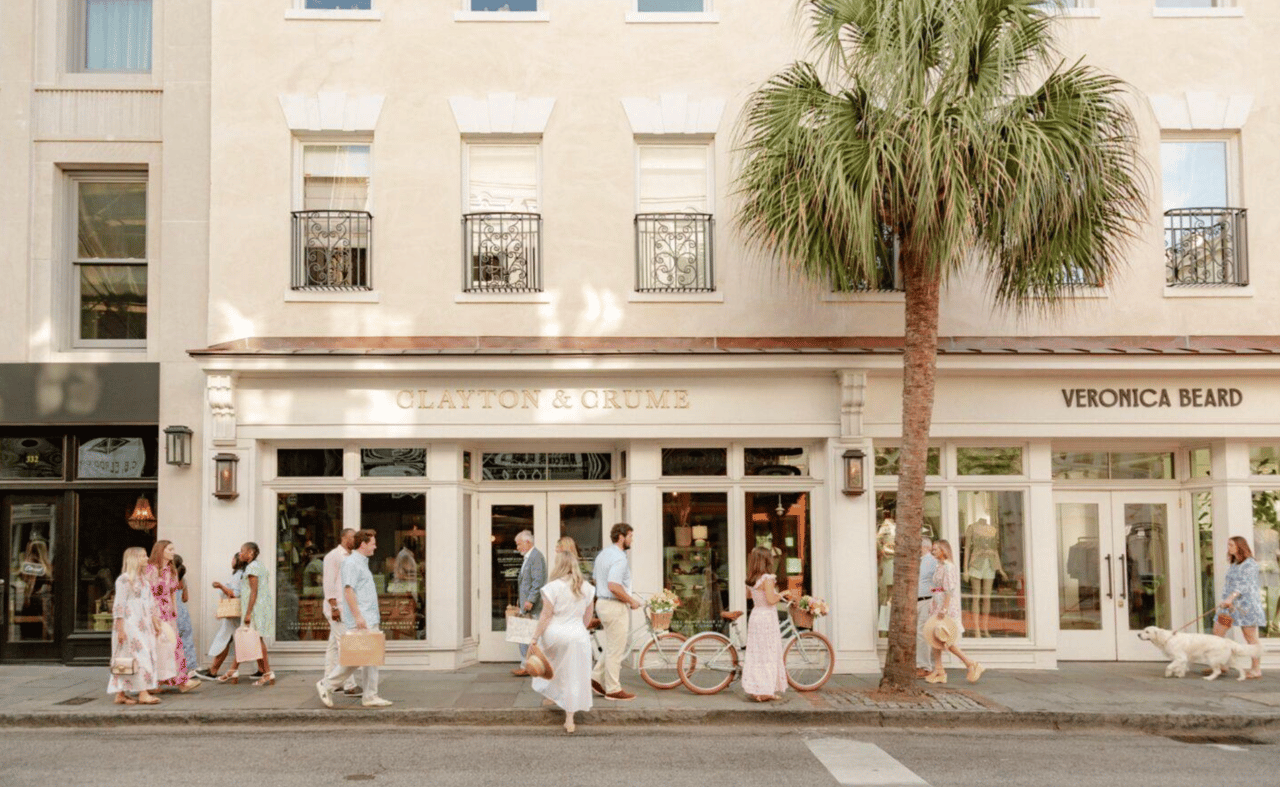
From Charleston institutions and independent boutiques to designer flagships, here’s where to shop along one of downtown’s most iconic streets.
For an unmatched Charleston real estate experience tailored to your needs, reach out to Kaylan Tyler today. Let her passion and expertise guide you in finding or selling your dream home. Contact Kaylan now to begin your journey towards the perfect Charleston lifestyle!